Coronavirus: Confirmed global cases pass one million
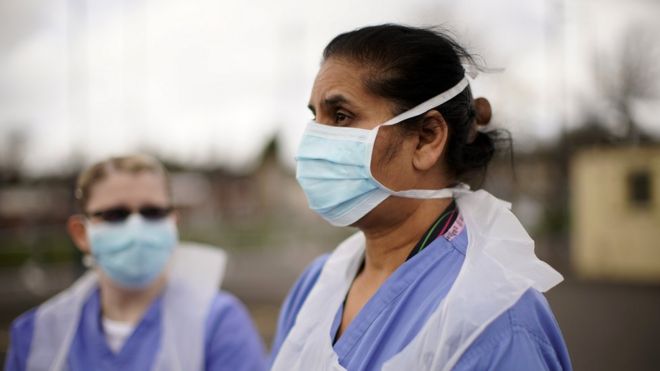 |
| Healthcare services around the world have been overwhelmed by the pandemic |
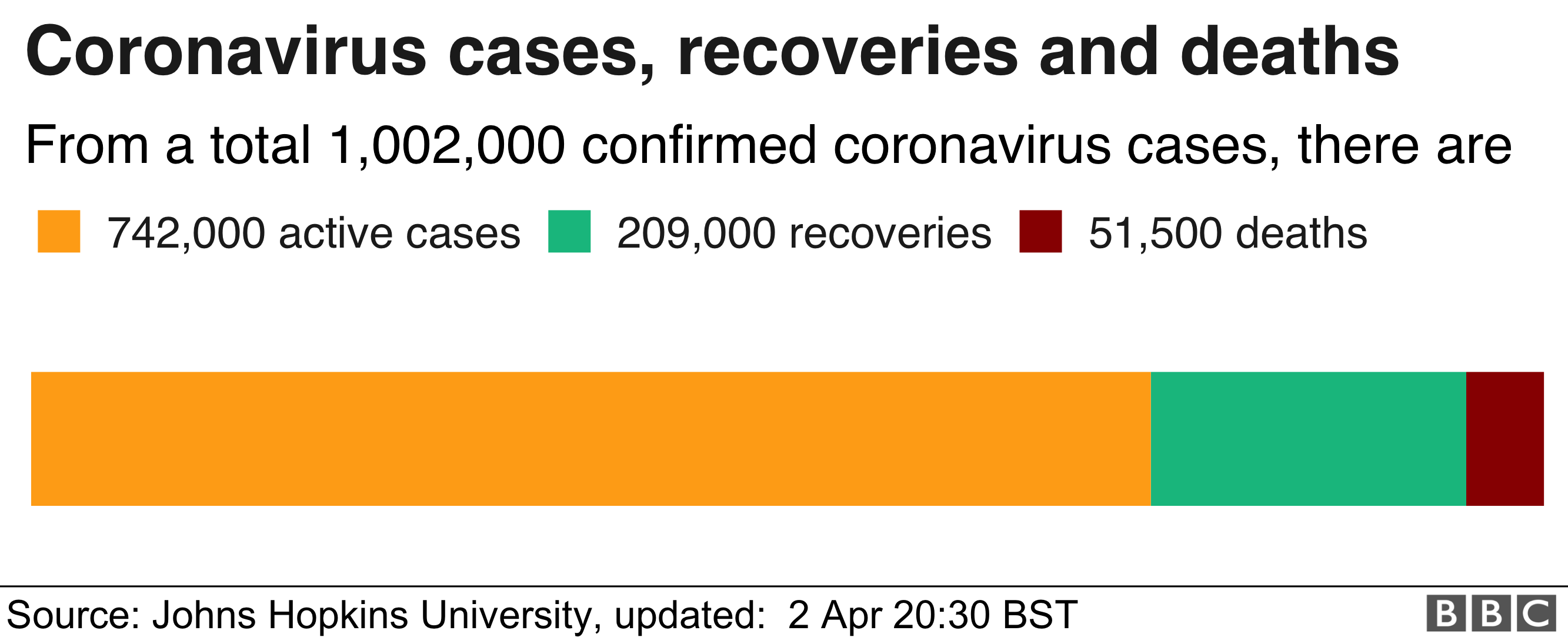
More than a million cases of coronavirus have been registered globally, according to the latest figures from Johns Hopkins University - another grim milestone as the world grapples with the spreading pandemic.
Nearly 53,000 people have died and more than 210,000 have recovered, according to the US university's figures.
The US has the most cases, and more than 1,000 died there in the past day.
The disease, Covid-19, first emerged in central China three months ago.
Though the tally kept by Johns Hopkins records one million confirmed cases, the actual number is thought to be much higher.
It took a month and a half for the first 100,000 cases to be registered. A million was reached after a doubling in cases over the past week.
Nearly a quarter of cases have been registered in the United States, while Europe accounts for around half.
The pandemic is taking a huge economic toll: an extra 6.6 million Americans applied for unemployment benefit last week.
What's the latest?
The US has reported 1,169 deaths in 24 hours - the highest daily death toll of any country so far.
Earlier, Spain said 950 people had died in a day, which is a record number for Europe in this outbreak.
The number of confirmed Spanish cases rose from 102,136 on Wednesday to 110,238 - an 8% rise that is similar to the rate recorded in previous days. Authorities believe the virus is now peaking and say they expect to see a drop in figures in the days ahead.
"We continue with an increase of around 8%. This points, as we have already seen, to a stabilisation in the data that we're registering," said María José Sierra, from the Spanish health ministry's emergency co-ordination unit.
Spain, the worst-hit nation after Italy in terms of deaths, has also lost nearly 900,000 jobs since mid-March.
In other developments:
- The commander of the USS Theodore Roosevelt has been removed after saying the US Navy was not doing enough to halt a coronavirus outbreak on board the aircraft carrier
- The Zaandam cruise ship, with dozens of ill passengers on board, docked in Florida after several South American countries refused to accept it
- New York mayor Bill de Blasio urged all of the city's residents to cover their faces when outside and near others, with a scarf or bandana, rather than a surgical mask, as medics need the latter
- The World Bank approved a plan to disburse $160bn (£130bn) in emergency aid over 15 months to help countries stricken by the pandemic
- The French authorities have boosted police checks to prevent anyone trying to go on holiday this weekend ahead of Easter
- UK Health Secretary Matt Hancock said the aim was 100,000 tests a day in England by the end of April amid criticism of the government's plans
- A 4,000-bed emergency field hospital at London's ExCel centre is due to open later
How did we get here?
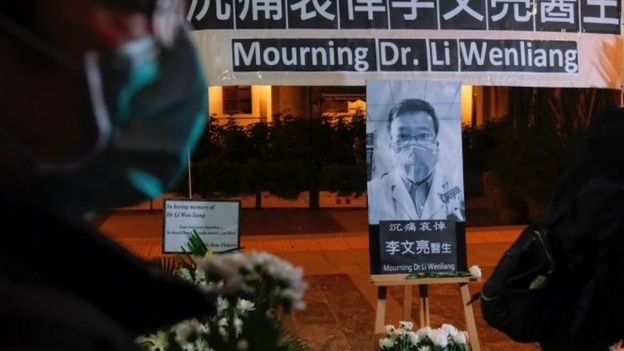
In China at the end of December, a 34-year-old ophthalmologist named Dr Li Wenliang tried to send a message to other medics warning them about a new virus in the city of Wuhan in Hubei Province.
He was later visited by the police and accused of scaremongering. Dr Li died on 6 February after contracting the virus while treating patients in Wuhan.
 REUTERS
China first informed the World Health Organization (WHO) about cases of pneumonia with unknown causes on 31 December.
On 3 January, the BBC wrote its first news report about a "mystery virus" in Wuhan. At the time, 44 cases had been confirmed, 11 of which were considered severe.
Many feared there would be a repeat of the 2003 Sars outbreak that killed 774 people. By 18 January the confirmed number of cases had risen to around 60 - but experts estimated the real figure was closer to 1,700.
Just two days later, as millions of people prepared to travel for the lunar new year, the number of cases more than tripled to more than 200 and the virus was detected in Beijing, Shanghai and Shenzhen.
Credits: bbc.com


Comments
Post a Comment